
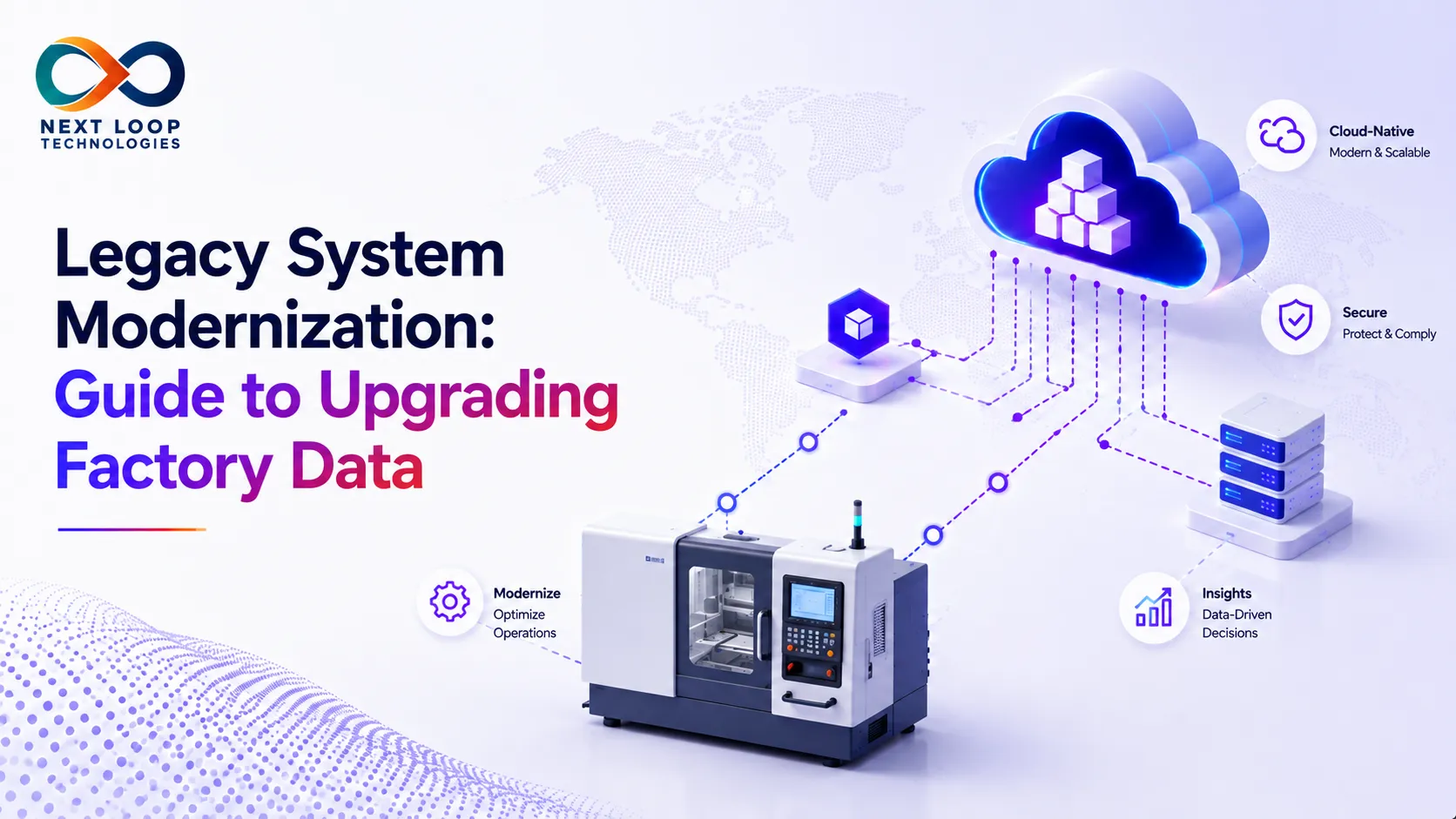
Legacy System Modernization: A Complete Guide to Upgrading Factory Data
The Author
Aditi Agrawal is an SEO Executive at Nextloop Technologies who writes about SEO, digital marketing, technology, and emerging trends in the digital landscape. Her work focuses on sharing practical, easy-to-understand insights to help businesses strengthen their online presence and visibility.
Factories and energy plants rely on massive heavy machinery. These industrial pumps, complex assembly lines, and high-pressure compressors were built to last for multiple decades. They are incredibly powerful and they perform their physical duties perfectly day after day.
However, they have one major problem that completely frustrates modern executive teams. They were never designed to connect to the modern internet.
When these machines were installed years ago, digital cloud servers did not exist. The machinery was built to operate in total isolation. This creates a massive digital blind spot for today's operations directors. When executives cannot see live production numbers, they are forced to make major business choices based on outdated spreadsheets.
Upgrading these older machines does not mean you have to throw them away. Legacy system modernization is the highly specialized process of connecting your existing physical equipment to modern web dashboards. You can keep your durable mechanical assets while completely upgrading your digital capabilities.
This detailed guide explains exactly how connecting legacy machinery to the cloud works safely efficiently and simply.
Read more: Microservices Evolving into Distributed Cloud-Native Applications: A New Era in Software Development
The Hidden Costs of Aging Systems
What Is Legacy System Modernization?
Legacy system modernization is the process of connecting existing factory equipment, pumps, compressors, assembly lines, to modern cloud dashboards without replacing the physical machinery itself. It works by attaching sensors and edge devices that extract real-time data from equipment that was never originally built to share it.
Many factory directors hesitate to touch their older machinery because it is technically still working. However, waiting until a machine completely fails is a terrible business strategy. The physical machinery essentially traps the critical numbers inside the metal casing.
Operations directors face extreme financial risks when they ignore these five common reporting failures:
- Invisible Metrics: The only way to check machine health is by walking down to the factory floor to read a physical screen mounted directly on the metal casing.
- Slow Reporting: Executive teams wait days for manual data entry just to see the total weekly production volume.
- Wasted Labor: Highly skilled engineers spend their valuable time copying numbers onto paper clipboards instead of actually optimizing the machinery.
- Inventory Panic: Facilities stockpile millions of dollars in spare parts because they never know exactly what will break next.
- Compliance Penalties: Regulatory bodies require exact emissions and performance data which is impossible to track accurately by hand.
Modernizing factory floor data is the only way your business can operate efficiently. When leaders do not know if a machine is failing until it actually starts smoking, the company loses massive amounts of money.
What Is IT/OT Convergence?
IT/OT convergence is the integration of Information Technology (office systems, cloud servers, corporate networks) with Operational Technology (factory machinery, control systems, safety valves) into a single unified network. It lets executive teams and factory engineers see the same production data at the same time, instead of relying on manually exported spreadsheets. To solve thE massive data problem, we first need to understand the two very different worlds operating inside a standard factory. These two groups rarely speak the same language, which causes massive delays in production reporting.
- Information Technology IT: This is the team that manages your office computers, your corporate email, and your cloud servers. They work in a world of high-speed internet modern software and instant digital communication.
- Operational Technology OT: This is the team that manages the physical heavy machinery, the high-pressure safety valves, and the actual factory floor. They work in a world of physical pressure, mechanical vibration, and much older communication protocols.
For decades these two teams have used completely different software platforms that could not speak to each other. Bringing these two distinct worlds together into a single unified network is called IT OT convergence.
Bridging the gap between software and physical machinery means your executive team and your factory engineers finally look at the exact same numbers at the exact same time.
When you unite these two isolated departments, the entire business moves exponentially faster. Executives no longer have to wait for the OT team to manually export a spreadsheet at the end of a shift. This clarity is one of the biggest benefits of it ot convergence because it eliminates hours of wasted daily communication.
Building a Proper Legacy System Modernization Strategy
You cannot simply plug a twenty-year-old machine directly into a modern laptop. You need a highly organized engineering plan. Building a proper legacy system modernization strategy allows you to keep your oldest machines while upgrading your digital capabilities completely in a very safe manner.
Here are the four critical steps to a successful factory upgrade:
- Set Clear Executive Goals: Decide exactly what numbers your board actually needs to see. A strong strategy identifies the absolute most critical failure points in the factory and focuses entirely on extracting data from those specific machines first.
- Audit the Factory Floor: Send engineers to document every single machine its age and its current digital capability. This prevents unexpected surprises during the software installation.
- Choose Custom SCADA Integration Services: SCADA stands for Supervisory Control and Data Acquisition. Because every factory uses completely different brands of legacy machinery, you cannot buy a generic software package. Partnering with experts who provide custom scada integration services ensures your specific equipment connects safely.
- Translate the Protocols: Industrial equipment communicates using older rigid languages like Modbus and OPC UA. You must teach your new cloud servers how to understand these older dialects through careful software translation.
How to Extract Data from Old Factory Equipment
If you are wondering how to extract data from old factory equipment, the answer relies entirely on clever digital translation. We introduce a digital translator directly onto the factory floor.
Implementing scalable industrial IoT solutions allows you to attach smart digital sensors directly to your oldest mechanical equipment. These digital sensors listen to the mechanical vibrations and temperature changes completely passively. They never interfere with the actual production line or the power supply.
Mid Content Infographic Brief for Designer: Create a landscape 16 9 orientation infographic. Use a premium minimal visual style. Show a simple three step flowchart of an old physical machine connecting to a small edge computer which then sends a clean data signal to a modern executive dashboard.
What Is Edge Computing in Manufacturing?
Edge computing in manufacturing means placing a small industrial computer directly next to a physical machine, so data is processed on-site instead of being sent raw to a distant server. This keeps translation and formatting local, cutting latency and reducing the bandwidth needed to move factory data to the cloud. The real secret to this translation process is edge computing. Instead of sending raw messy data across the internet to a distant server, you place a very small industrial computer directly next to the physical machine.
Edge computing manufacturing works incredibly fast because the data stays strictly local. The small computer translates the old machine language instantly packages it neatly and then sends only the clean formatted numbers up to your executive dashboard.

A three-step digital translation process showing physical machine data captured by an edge computer and visualized on a modern executive dashboard.
Cloud Migration for Legacy Manufacturing Explained
Historically factory data was stored on massive physical server racks sitting in a hot dusty closet near the factory floor. This was highly expensive to maintain and very prone to overheating.
Cloud migration for legacy manufacturing means moving that storage out of your physical building and into highly secure professional data centers. This massive shift provides three major operational advantages:
- Global Accessibility: Your executives can log in and check live production numbers from a hotel room across the globe securely.
- Infinite Storage: You never have to worry about buying new hard drives when your database gets too large.
- Reduced Overhead: You completely eliminate the expensive electric bill required to cool your own physical server rooms.
Keeping Your Factory Safe with OT Security Solutions
The most common concern about modernization is facility safety. Connecting a physical factory machine to the internet sounds very dangerous to veteran engineers. If a malicious hacker gains access they could potentially shut down your entire production line.
This is exactly why proper OT security solutions are absolutely mandatory for any digital upgrade. Protecting your physical equipment requires industrial ot security solutions that block public internet traffic entirely.
Here is how modern security architecture keeps your factory completely safe from external threats:
- One Directional Data Flow: The integration software only allows data to travel up and out to the cloud. It completely blocks any digital signals or commands trying to come back down to the physical machine.
- Complete Data Scrambling: Every single production number is mathematically scrambled and highly encrypted before it ever leaves the factory floor. Nobody can read it in transit.
- Hidden Private Networks: Your machine data never touches the public internet. It travels through a completely private hidden digital tunnel directly to your secure corporate servers.
- Role Based Access: A junior employee cannot view the same data as the chief executive. Strict login rules ensure only authorized leaders can see critical infrastructure metrics.
Common Roadblocks in IT OT Convergence and How to Solve Them
Upgrading an entire factory is a complex journey. Leaders who prepare for these common roadblocks experience a much smoother transition.
- Cultural Resistance: Veteran floor engineers might not trust modern cloud software. You solve this by including them in the planning process early so they see the software as a helpful tool rather than a replacement.
- Protocol Mismatches: Old machines speak dozens of different proprietary languages. You solve this by using universal edge computing devices that can translate multiple dialects simultaneously.
- Network Bottlenecks: Older factory wiring cannot handle massive data streams. You solve this by filtering the data locally and only sending the most critical numbers up to the cloud.
Evaluating the Financial Return on Investment
Implementing SCADA integration requires an initial financial investment but the long term savings are astronomical. Modernizing your facility pays for itself through these three massive financial benefits:
- Reduced Emergency Repairs: Fixing a machine before it breaks is exponentially cheaper than cleaning up after a catastrophic explosion. Predictive analytics save millions in emergency overnight shipping fees.
- Extended Equipment Life: You do not have to buy a new million dollar compressor. Upgrading the digital sensors adds ten more years of usable life to your existing mechanical assets.
- Lower Insurance Premiums: Safer factories with better monitoring naturally receive better rates from corporate insurance providers because the risk of a major accident drops dramatically.
Improving Data Visibility in Manufacturing
The ultimate goal of this entire process is total executive clarity. Improving data visibility in manufacturing changes everything about how you run your daily operations. You move your entire company from a highly reactive business model to a highly proactive business model.
When your executive team can see instant live updates they can spot tiny inefficiencies before they become massive financial disasters. You stop wasting money on emergency helicopter repairs and you stop wasting valuable labor hours on manual data entry. Legacy system modernization is the single most powerful investment an industrial leader can make to secure the future of their facility and maximize their profit margins.
Featured Blogs
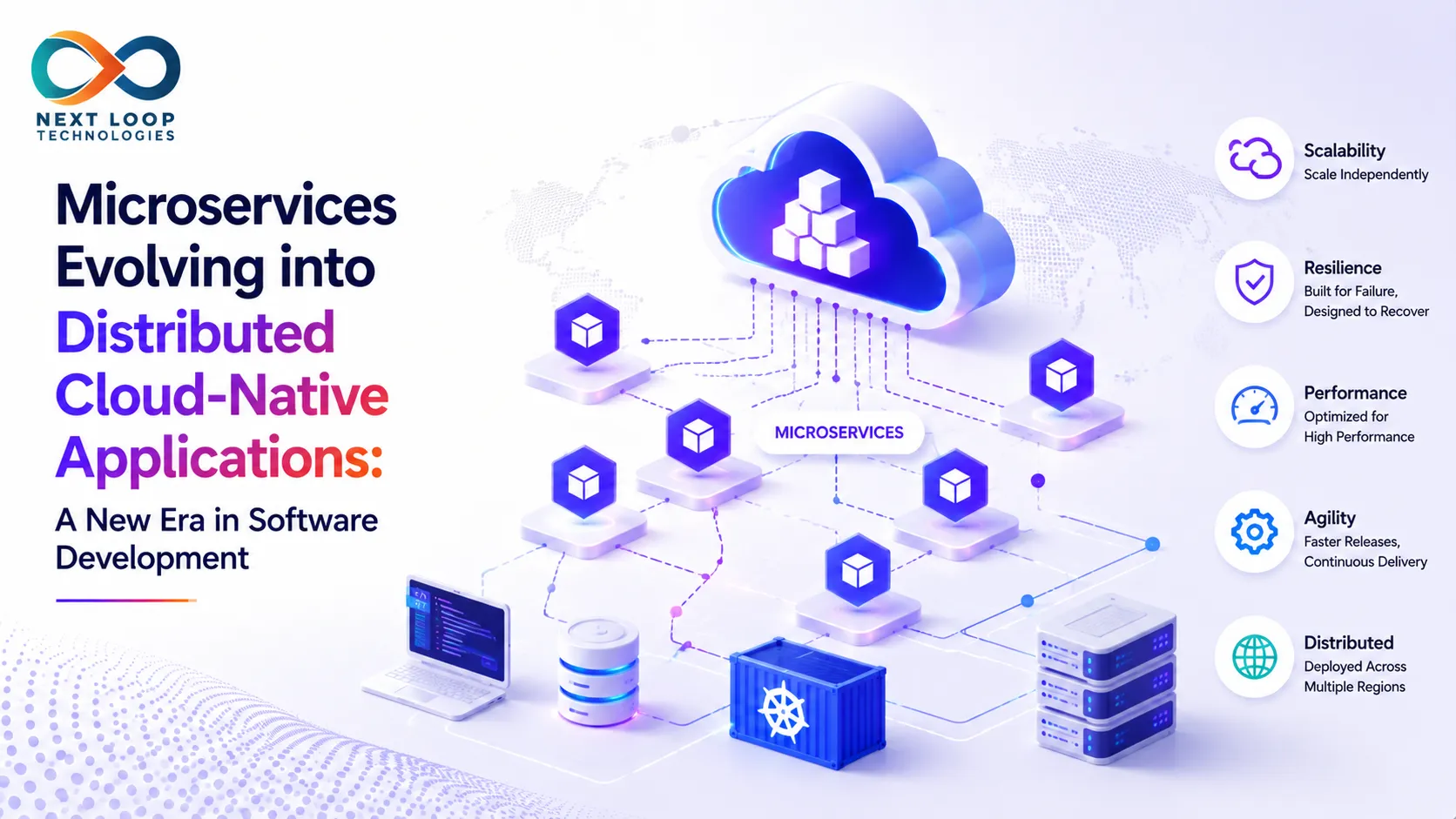
Microservices Evolving into Distributed Cloud-Native Applications: A New Era in Software Development
In today’s fast-paced digital world, businesses are constantly looking for ways to scale efficiently and respond quickly to changing customer needs. Microservices and cloud-native applications have become essential in achieving these goals. But what happens when these two powerful concepts come together?In this blog post, we’ll explore how microservices are evolving into distributed cloud-native applications, and what this means for the future of software development and business success.What are Microservices?Before we dive into evolution, let’s quickly define microservices.Microservices are an architectural approach where a large application is broken down into smaller, independent services. Each service focuses on a specific business functionality, making it easier to develop, deploy, and scale. These services can communicate with each other via APIs and are built and maintained independently.Microservices are known for offering flexibility, scalability, and better fault isolation.The Shift Towards Cloud-Native ApplicationsWhat Are Cloud-Native Applications?Cloud-native applications are applications built specifically to run in cloud environments like AWS, Azure, or Google Cloud, using technologies such as containers, Kubernetes, and serverless computing. Unlike traditional software adapted for the cloud, cloud-native apps are designed from the ground up to be scalable, resilient, and easy to update.Scalability: Cloud-native apps can scale easily to handle traffic spikes.Resilience: Cloud-native apps are built to handle failures and keep running without interruption.Flexibility: With cloud infrastructure, businesses can deploy updates quickly without worrying about hardware limitations.Cloud-native applications are built with technologies like containers, Kubernetes, and serverless computing, which provide the flexibility needed to build and manage dynamic, distributed systems.How Microservices Evolve Into Distributed Cloud-Native ApplicationsThe evolution of microservices into distributed cloud-native applications is an important development in the software industry. Here's how it works:Scalable Architecture: Traditional monolithic applications (which are single, tightly integrated systems) have limitations when it comes to scaling and agility. By evolving microservices into cloud-native apps, each service can be independently scaled in the cloud, ensuring that businesses can handle growing demand efficiently.Autonomous Services: Distributed cloud-native applications take microservices to the next level by breaking down services even further, creating a network of independently deployable units. These services can evolve and scale independently, offering better management and customization.Improved Resilience: In a cloud-native ecosystem, services are distributed across multiple servers or even regions. If one part of the system fails, other parts can continue running without major disruption, improving overall application resilience.Automation and Continuous Deployment: The cloud-native approach is built for automation. It enables automatic scaling, seamless updates, and a continuous deployment pipeline, making it easier for businesses to push new features and improvements quickly.Cost Efficiency: By distributing the application across multiple cloud environments, companies can optimize their use of resources, saving on infrastructure costs. Only the resources required by the application are used, leading to better cost control and efficiency.Why Should Businesses Care?For businesses, the evolution of microservices into distributed cloud-native applications means more than just technological advancement. Here’s why it matters:Faster Time-to-Market: With cloud-native apps, businesses can develop, test, and deploy new features faster than ever before, keeping up with market demands and customer expectations.Better User Experience: With the ability to scale and maintain services independently, businesses can provide a more reliable, responsive experience to users. Cloud-native applications ensure that customer-facing services remain available even during traffic surges.Flexibility for Growth: Cloud-native applications enable businesses to expand globally with minimal infrastructure changes. The cloud allows for easy replication of services in different regions to improve performance and meet global needs.Increased Innovation: With microservices evolving into cloud-native applications, businesses can quickly adapt to new technologies and innovate in ways that traditional applications couldn’t.Conclusion: The Future is Cloud-NativeThe evolution of microservices into distributed cloud-native applications is revolutionizing the way businesses develop and scale software. As companies continue to embrace the cloud, they can unlock new levels of efficiency, flexibility, and innovation.We specialize in helping businesses transition to cloud-native environments, offering expert guidance on adopting microservices and building scalable, resilient applications. Ready to take your software to the next level? Reach out to us today
Read More →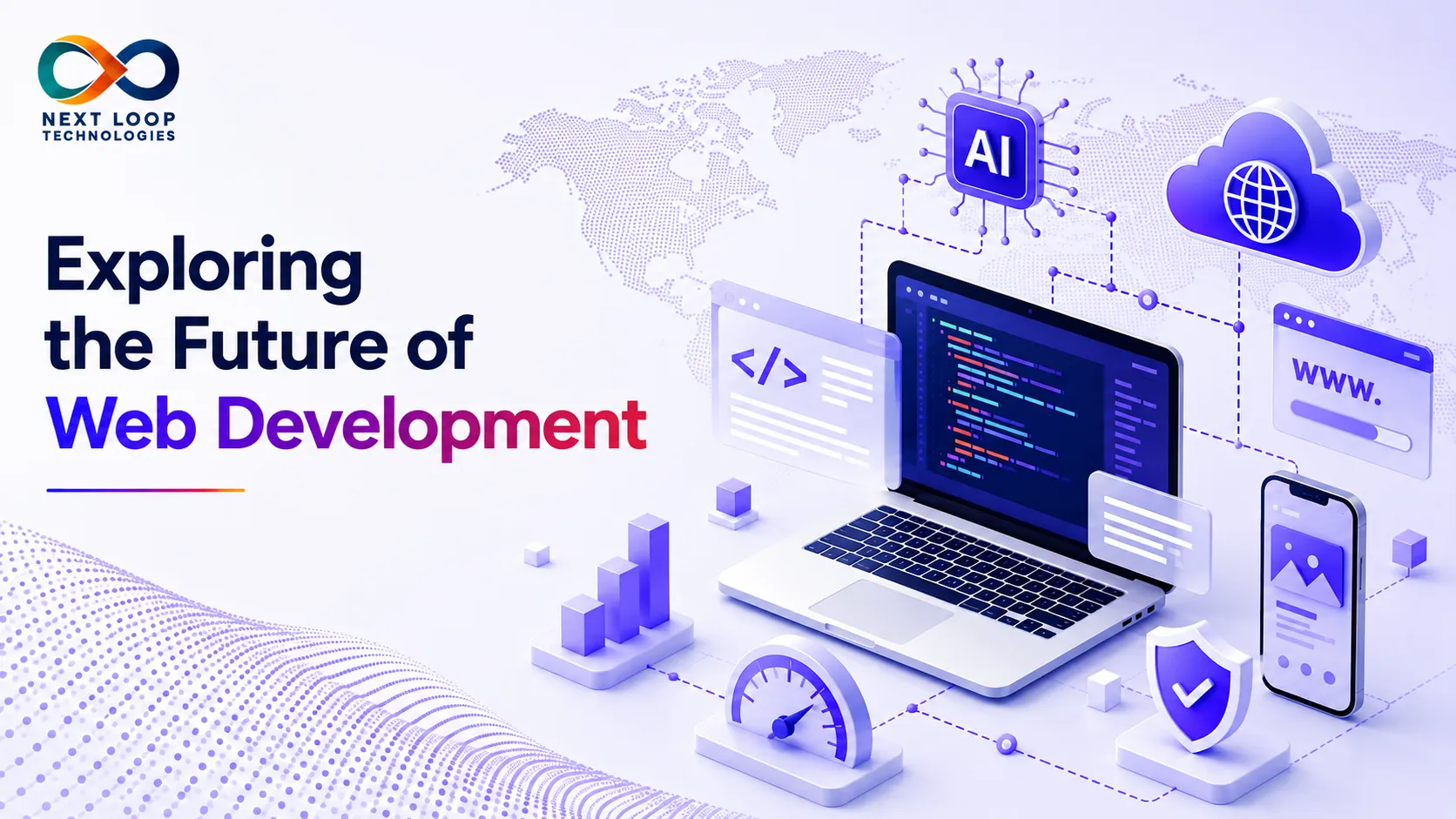
Exploring the Future of Web Development
IntroductionThe web development world is changing rapidly. At Nextloop Technologies, we stay ahead of these changes to deliver the best software solutions. Here's a straightforward look at what's shaping the future of web development.AI in Web DevelopmentArtificial intelligence is making web development smarter and faster:AI coding assistants help developers write better code with fewer mistakesAutomated testing finds bugs quickly without manual workSmart websites adjust content based on user behaviorWebAssembly: Making Browsers More PowerfulWebAssembly (Wasm) is a technology that lets browsers run code at near-native speed, enabling complex applications, like advanced graphics, games, and heavy calculations, to run directly in a web browser without installed software.WebAssembly lets websites run complex applications directly in your browser:Websites can now perform tasks that once required installed softwareAdvanced graphics and games run smoothly in browsersComplex calculations happen instantly without server delaJamstack: Faster, Safer WebsitesJamstack is a modern web architecture that pre-builds website content and serves it from a global content delivery network, rather than generating pages on a server for every visitor. This makes sites faster to load, harder to hack, and easier to scale during traffic spikes.Jamstack is a modern way to build websites that are:Lightning-fast because content is pre-built and delivered globallyMore secure with fewer points for hackers to targetEasier to scale when traffic increasesProgressive Web Apps (PWAs)A Progressive Web App (PWA) is a website built to behave like a mobile app — installable on a home screen, able to work offline, and capable of sending push notifications — while still running through a standard web browser.PWAs combine the best features of websites and mobile apps:Work offline when internet connection is poorCan be installed on home screens like regular appsSend notifications to keep users engagedLoad quickly even on slow connectionsBusinesses can test ideas quickly without extensive codingLow-Code DevelopmentLow-code development is an approach that uses visual tools and pre-built components to build websites and applications with minimal hand-written code, allowing both developers and non-programmers to build and test functional products faster.Creating websites is becoming more accessible:Visual tools let non-programmers build functional websitesDevelopers can create projects faster with pre-built componentsBusinesses can test ideas quickly without extensive codingAPI-First ApproachModern websites are built around APIs (ways for different systems to communicate):Services can be built separately and work together seamlesslyContent can appear on websites, apps, and other platforms from one sourceUpdates happen faster because systems are independentAccessibility for EveryoneMaking websites usable by all people is becoming essential:Designs consider users with disabilities from the startVoice controls and screen readers work properly with websitesCompliance with legal requirements protects businessesSustainable Web DevelopmentEnvironmentally conscious coding practices are gaining importance:Efficient code uses less energyFast-loading sites reduce carbon footprintGreen hosting options minimize environmental impactHow Nextloop Technologies Stays AheadAt Nextloop Technologies, we implement these trends to build better software:We use AI tools to develop more efficientlyOur websites load quickly and work on all devicesWe build accessible solutions that reach wider audiencesOur development practices prioritize both performance and sustainabilityConclusionThe future of web development offers exciting possibilities for businesses. With the right technology partner, you can leverage these trends to create outstanding digital experiences.Nextloop Technologies combines technical expertise with forward-thinking approaches to deliver software solutions that work today and prepare you for tomorrow. Contact us to discuss how we can help your business succeed online.
Read More →
Generative AI – What is it and How Does it Work?
Generative AI is a type of artificial intelligence that is quickly becoming one of the most exciting technologies in the world. But what exactly is it? And how does it work? we’ll explain generative AI in simple terms and show you how it’s transforming industries and everyday life.What is Generative AI?Generative AI refers to a type of artificial intelligence that can create new things. Instead of just analyzing or predicting things, like some traditional AIs, generative AI actually produces new content. This content could be anything—from writing stories or poems, to generating images, music, or even video games.How Does Generative AI Work?Generative AI works by using machine learning, a type of AI that teaches computers to learn patterns from data. Here’s a simple breakdown of how it works:Training: Generative AI is first “trained” by feeding it large amounts of data—like text, images, or sounds. The AI looks at this data and learns how different elements work together. For instance, if it’s being trained to write stories, it will look at thousands of books or articles to learn sentence structure, vocabulary, and tone.Generating: Once the AI has learned from the data, it can begin generating new content. If you give it a prompt, like "write a short story about space," the AI will use what it has learned to create a new story that matches the prompt.Refining: The more the AI generates, the better it gets. It can refine its creations based on feedback from humans or its own learning process, making its results more accurate and creative over time.Where is Generative AI Used?Generative AI is already making an impact in many industries. Here’s a look at some of the places where it’s being used:Art and Design: Artists and designers use generative AI to create new artworks, logos, or design ideas. It can help create unique designs quickly or give inspiration for new artistic projects.Content Creation: Generative AI can write articles, blogs, and even books! It can also create scripts for videos or social media posts. Many content creators use it to save time and come up with fresh ideas.Healthcare: Generative AI is being used in healthcare to create new drug formulas or discover new ways to treat diseases. It can quickly analyze medical data and propose solutions, making the process of finding new treatments faster and more efficient.How Will Generative AI Affect You?Generative AI isn’t just for businesses and professionals—it has an impact on everyday users too. Here are some ways it could affect you:Personalized Content: Generative AI can help create personalized recommendations, whether it’s movies, music, or articles. It learns from your preferences and can suggest content that you might enjoy.Creativity Boost: Even if you’re not a professional artist or writer, you can use generative AI to help with your own creative projects. You could use it to write poems, design posters, or even create your own music.Smarter Services: In the future, generative AI could make customer service smarter and more efficient. You might be chatting with an AI that can quickly solve your problems or answer your questions.Faster Problem Solving: Generative AI can help solve problems faster, whether it's in business, healthcare, or education. It can analyze large amounts of data and generate solutions quickly, giving humans more time to focus on important tasks.Challenges of Generative AIWhile generative AI is amazing, it comes with its own challenges:Ethical Concerns: Generative AI can create content that looks real but isn’t. This raises concerns about misinformation, like AI-generated fake news or deepfake videos. We need to ensure it’s used responsibly.Job Displacement: Some tasks, like writing or design, could become automated with generative AI, which may change job roles in the future. However, AI will also create new opportunities in tech and creative industries.Quality Control: Although generative AI can create amazing things, it sometimes makes mistakes. It may create content that doesn’t make sense or isn’t up to standard. That’s why human oversight is still important.Final ThoughtsGenerative AI is an exciting technology that is transforming the way we create and interact with the digital world. It’s helping people in art, music, writing, healthcare, and many other industries. While it’s still evolving, the future of generative AI is bright, and it will continue to have a huge impact on our daily lives.Stay updated with the latest trends and innovations in AI. Keep in touch with us to learn more about how generative AI is shaping the future.
Read More →