

Microservices Evolving into Distributed Cloud-Native Applications: A New Era in Software Development
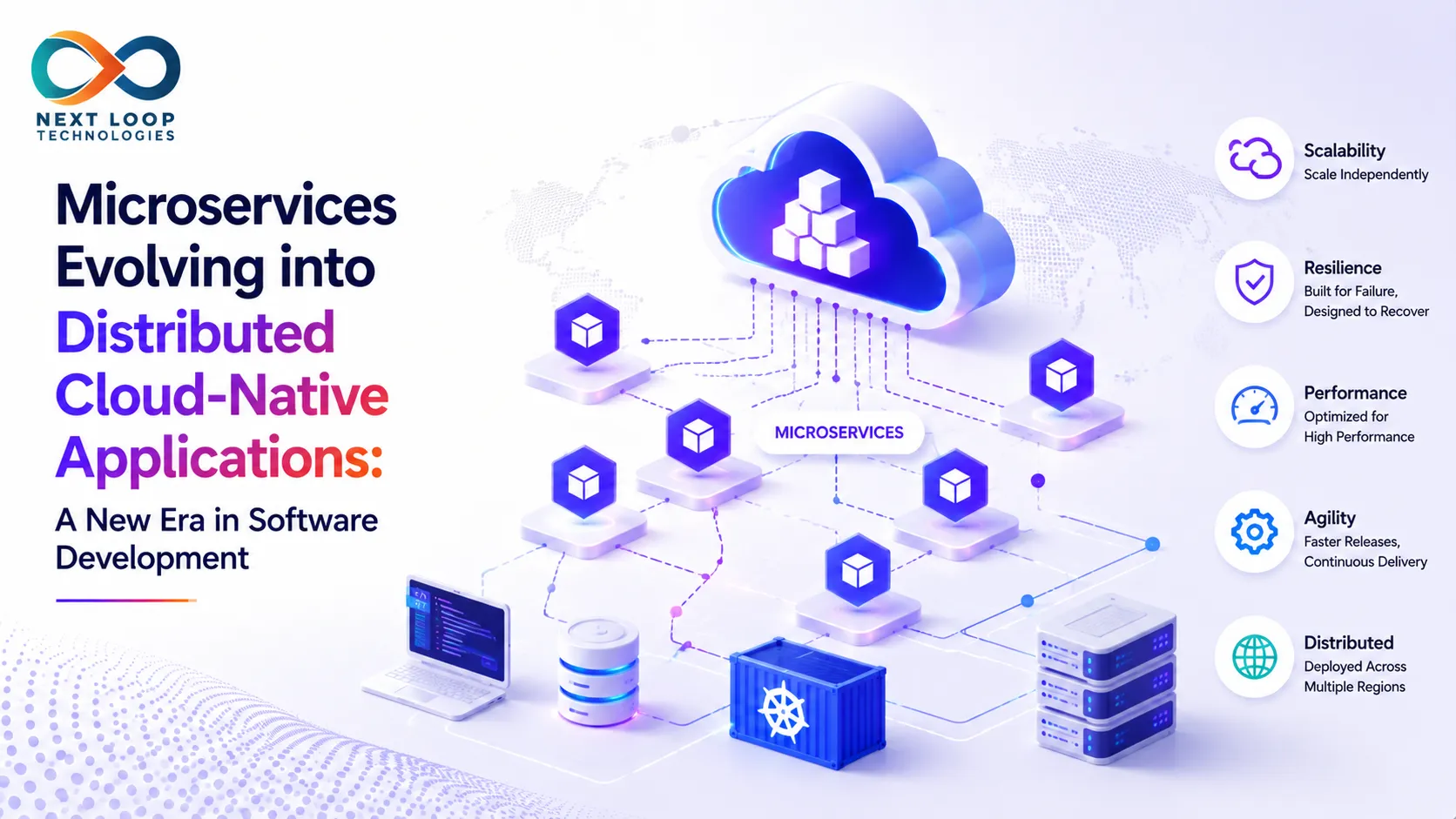
In today’s fast-paced digital world, businesses are constantly looking for ways to scale efficiently and respond quickly to changing customer needs. Microservices and cloud-native applications have become essential in achieving these goals. But what happens when these two powerful concepts come together?
In this blog post, we’ll explore how microservices are evolving into distributed cloud-native applications, and what this means for the future of software development and business success.
What are Microservices?
Before we dive into evolution, let’s quickly define microservices.
Microservices are an architectural approach where a large application is broken down into smaller, independent services. Each service focuses on a specific business functionality, making it easier to develop, deploy, and scale. These services can communicate with each other via APIs and are built and maintained independently.
Microservices are known for offering flexibility, scalability, and better fault isolation.
The Shift Towards Cloud-Native Applications
What Are Cloud-Native Applications?
Cloud-native applications are applications built specifically to run in cloud environments like AWS, Azure, or Google Cloud, using technologies such as containers, Kubernetes, and serverless computing. Unlike traditional software adapted for the cloud, cloud-native apps are designed from the ground up to be scalable, resilient, and easy to update.
Scalability: Cloud-native apps can scale easily to handle traffic spikes.
Resilience: Cloud-native apps are built to handle failures and keep running without interruption.
Flexibility: With cloud infrastructure, businesses can deploy updates quickly without worrying about hardware limitations.
Cloud-native applications are built with technologies like containers, Kubernetes, and serverless computing, which provide the flexibility needed to build and manage dynamic, distributed systems.
How Microservices Evolve Into Distributed Cloud-Native Applications
The evolution of microservices into distributed cloud-native applications is an important development in the software industry. Here's how it works:
Scalable Architecture: Traditional monolithic applications (which are single, tightly integrated systems) have limitations when it comes to scaling and agility. By evolving microservices into cloud-native apps, each service can be independently scaled in the cloud, ensuring that businesses can handle growing demand efficiently.
Autonomous Services: Distributed cloud-native applications take microservices to the next level by breaking down services even further, creating a network of independently deployable units. These services can evolve and scale independently, offering better management and customization.
Improved Resilience: In a cloud-native ecosystem, services are distributed across multiple servers or even regions. If one part of the system fails, other parts can continue running without major disruption, improving overall application resilience.
Automation and Continuous Deployment: The cloud-native approach is built for automation. It enables automatic scaling, seamless updates, and a continuous deployment pipeline, making it easier for businesses to push new features and improvements quickly.
Cost Efficiency: By distributing the application across multiple cloud environments, companies can optimize their use of resources, saving on infrastructure costs. Only the resources required by the application are used, leading to better cost control and efficiency.
Why Should Businesses Care?
For businesses, the evolution of microservices into distributed cloud-native applications means more than just technological advancement. Here’s why it matters:
Faster Time-to-Market: With cloud-native apps, businesses can develop, test, and deploy new features faster than ever before, keeping up with market demands and customer expectations.
Better User Experience: With the ability to scale and maintain services independently, businesses can provide a more reliable, responsive experience to users. Cloud-native applications ensure that customer-facing services remain available even during traffic surges.
Flexibility for Growth: Cloud-native applications enable businesses to expand globally with minimal infrastructure changes. The cloud allows for easy replication of services in different regions to improve performance and meet global needs.
Increased Innovation: With microservices evolving into cloud-native applications, businesses can quickly adapt to new technologies and innovate in ways that traditional applications couldn’t.
Conclusion: The Future is Cloud-Native
The evolution of microservices into distributed cloud-native applications is revolutionizing the way businesses develop and scale software. As companies continue to embrace the cloud, they can unlock new levels of efficiency, flexibility, and innovation.
We specialize in helping businesses transition to cloud-native environments, offering expert guidance on adopting microservices and building scalable, resilient applications. Ready to take your software to the next level? Reach out to us today