

Robotic Process Automation (RPA): Benefits, How It Works, and Business Applications
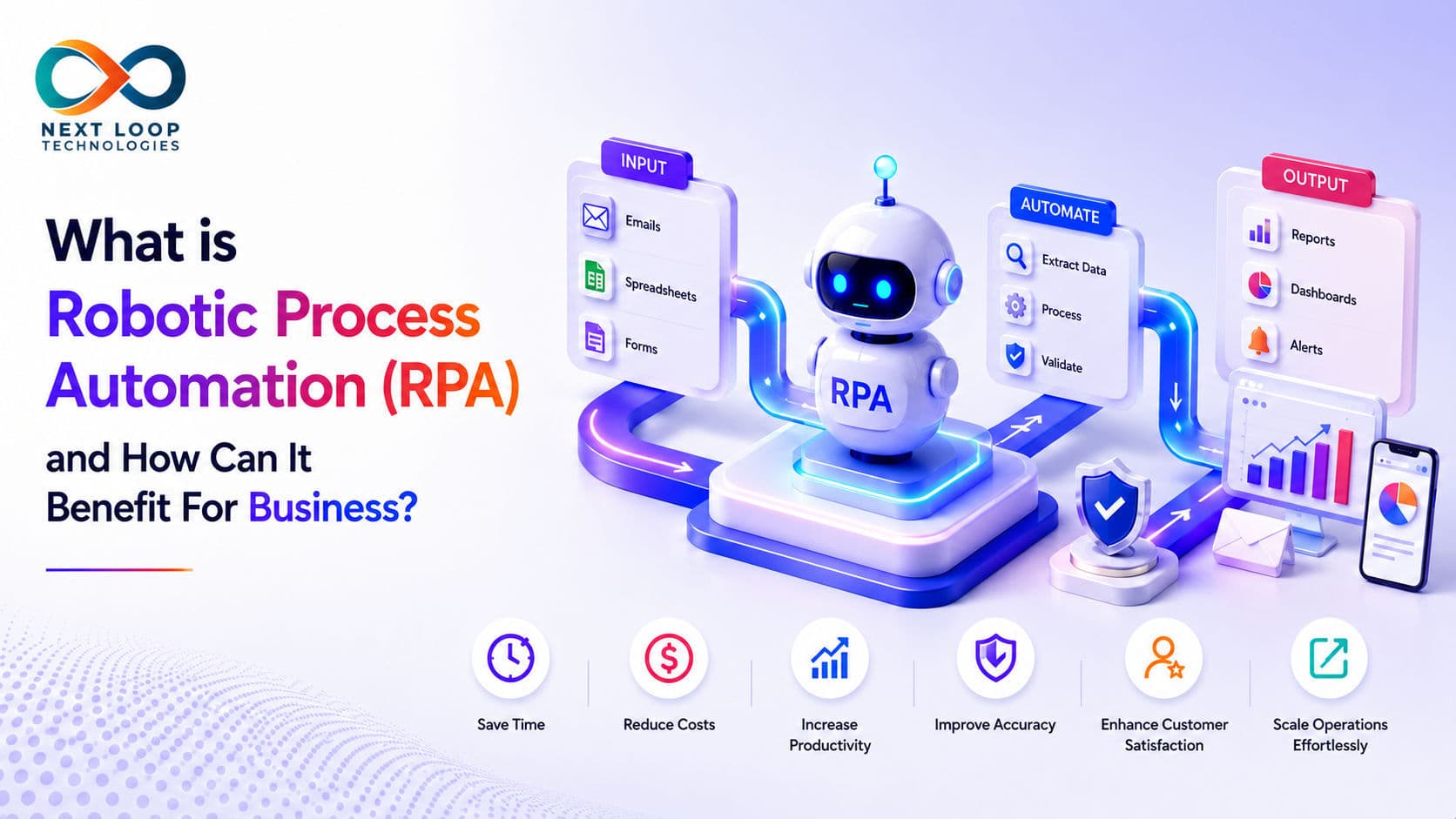
Robotic Process Automation (RPA) is a technology that uses software robots, or “bots,” to automate repetitive, rule-based digital tasks such as data entry, report generation, and transaction processing. By automating routine workflows, businesses can improve efficiency, reduce operational costs, and minimize human errors.
In this guide, we’ll explore what RPA is, how it works, its key business benefits, the industries using it, and how organizations can get started with automation.
What Is Robotic Process Automation (RPA)?
Robotic Process Automation (RPA) uses software bots to perform repetitive digital tasks by interacting with applications and systems in much the same way a human user would. These bots can enter data, transfer information between applications, generate reports, and process transactions according to predefined rules.
Unlike traditional system integrations, RPA can often operate on top of existing software without requiring major changes to the underlying systems. This makes it a practical option for automating structured workflows across different business applications.
Why Does RPA Matter for Your Business?
RPA helps organizations streamline daily operations, improve productivity, and make better use of employee time. Its key benefits include:
1. Boost Operational Efficiency
Software bots can execute repetitive tasks quickly and consistently, helping businesses reduce processing times and handle larger workloads with less manual effort.
2. Reduce Operational Costs
Automating routine processes can lower the time and resources required to complete administrative work, allowing teams to focus on higher-value activities.
3. Improve Accuracy and Consistency
RPA bots follow predefined rules, reducing errors associated with repetitive manual data entry and transaction processing. However, results still depend on the quality of the input data and the automation rules.
4. Enhance Employee Productivity and Satisfaction
When bots handle repetitive tasks, employees can spend more time on problem-solving, customer service, analysis, and other activities that require human judgment.
5. Support Compliance and Auditability
RPA can maintain process logs and consistent execution records, helping businesses monitor workflows and support compliance requirements. Appropriate access controls, monitoring, and data protection measures remain essential.
How Does Robotic Process Automation Work?
RPA implementation typically involves four main steps.
Step 1: Identify Suitable Tasks
Identify repetitive, rule-based processes with clear inputs, predictable outcomes, and measurable time or cost savings. Examples include invoice processing, data entry, and report generation.
Step 2: Configure the Software Bot
Use an RPA platform to define the workflow, business rules, application interactions, and exception-handling procedures the bot must follow.
Step 3: Deploy the Bot
Configure the bot to execute the selected workflow in the appropriate environment, with access permissions and human approval steps where necessary.
Step 4: Monitor and Optimize Performance
Monitor execution logs, error rates, processing times, and business outcomes. Update workflows as applications, business rules, or operational requirements change.
Which Industries Use RPA?
RPA can support automation across industries where repetitive digital workflows are common.
Banking and Financial Services
Banks and financial institutions use RPA for customer onboarding, transaction reconciliation, loan application processing, and report preparation.
Healthcare
Healthcare organizations can use automation to support claims processing, patient data management, appointment administration, and billing workflows, subject to applicable privacy and security requirements.
Retail and E-commerce
Retail businesses can automate inventory updates, order processing, invoice management, and repetitive customer service workflows.
IT and Business Services
IT and business service teams can use RPA for routine data transfers, scheduled reporting, account administration, and other standardized operational tasks.
How Can Your Business Get Started with RPA?
A structured implementation approach helps businesses identify the right opportunities and reduce automation risks.
1. Assess Your Existing Workflows
Review daily operations to identify tasks that are repetitive, time-consuming, rules-based, and suitable for automation.
2. Choose the Right RPA Tool
Evaluate available platforms based on integration capabilities, security, scalability, licensing costs, and compatibility with your existing applications.
3. Start with a Pilot Project
Automate one well-defined process first. Measure its impact on processing time, error rates, operating costs, and employee workload before expanding the initiative.
4. Scale Automation Gradually
Use lessons from the pilot to refine workflows, establish governance, train employees, and expand automation to other suitable business processes.
How AI and Machine Learning Can Enhance Business Automation
Traditional RPA works best with structured, predictable tasks that follow predefined rules. However, some business processes involve unstructured documents, changing patterns, language, or data that requires interpretation. This is where artificial intelligence and machine learning can complement automation.
AI-powered systems can support document classification, information extraction, prediction, and intelligent decision-making, while RPA can execute the resulting actions across business applications. Combining these technologies can help businesses develop more flexible workflows, although the right approach depends on the process, data quality, and level of human oversight required.
Businesses exploring intelligent automation can learn more about AI and ML development services from Nextloop Technologies. These services can help organizations explore AI-powered applications and machine learning solutions that align with their operational needs and digital transformation goals.
Before implementing intelligent automation, businesses should also consider data privacy, system security, model reliability, and human review for sensitive or high-impact decisions.
Conclusion: Is RPA Right for Your Business?
Robotic Process Automation can help businesses increase efficiency, reduce repetitive manual work, improve consistency, and free employees to focus on more valuable activities. Its effectiveness depends on selecting suitable processes, configuring bots correctly, and continuously monitoring their performance.
For organizations looking to go beyond rule-based automation, combining RPA with AI and machine learning may unlock additional opportunities to streamline complex workflows.
Ready to explore automation opportunities for your business? Connect with Nextloop Technologies to discuss your digital transformation goals and identify potential solutions.